Summary: There are pros and cons to using either fresh or frozen embryo transfers, depending on a woman’s fertility profile, hormone levels, and objectives for treatment. Fresh transfers offer a quicker time frame, but frozen transfers allow for better uterine preparation and flexibility. Expert advice on finding the best course of action to ensure IVF success.
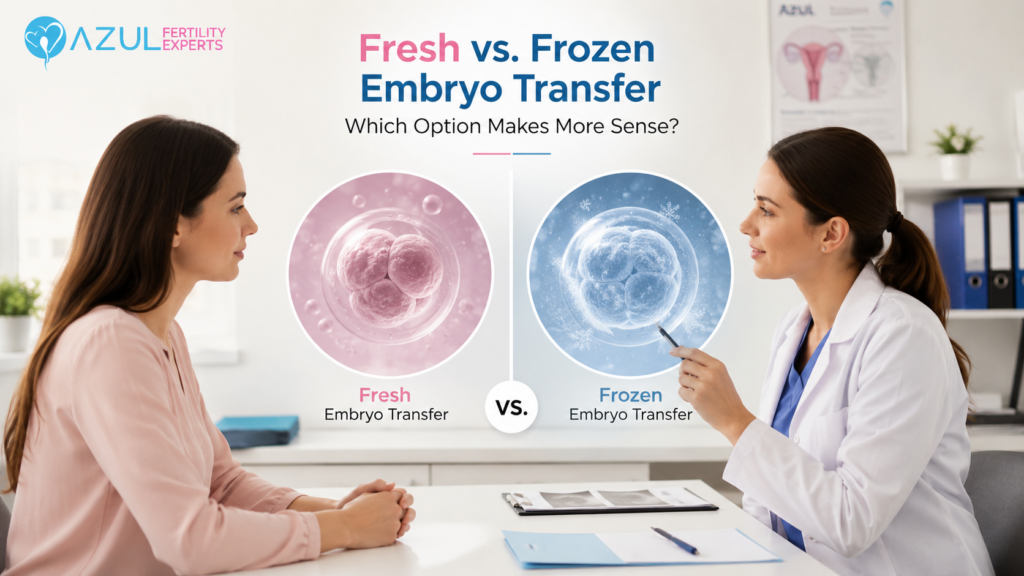
Every IVF journey is built on a series of important decisions. Some choices are straightforward, while others can leave intended parents wondering which path offers the greatest chance of success. One of the most common questions fertility specialists hear is whether a fresh embryo transfer or a frozen embryo transfer is the better option.
There is no one-size-fits-all solution as simple as picking the new or more popular technique. Depending on your medical history, fertility objectives and treatment plan, each approach provides its fair share of benefits. Knowing both options can help you make an informed choice with your fertility physician.
Understanding Fresh Embryo Transfer
The embryo transfer occurs in the same IVF cycle in which the eggs are collected and fertilized. The developed embryos are not frozen, but transferred directly into the uterus after several days in lab culture.
This way, treatment goes quicker as you do not have to wait for the embryos to develop before they can be transferred. It is widely understood that fresh transfers have been the standard practice in IVF for many years.
Fresh embryo transfers might be indicated when:
- Ovarian stimulation is effective in the patient.
- Hormone levels are healthy.
- There is no increased risk of OHSS.
- The uterine lining is ready for implantation.
In some cases, this option offers an effective treatment that won’t result in further delay to the patient while trying to conceive.
What Is a Frozen Embryo Transfer?
Frozen embryos (FET) are embryos which have been healthy following fertilization and are preserved using sophisticated cryopreservation methods. The embryos are then transferred in a later cycle, when the uterus is ready to receive them.
Embryo survival following thawing has been greatly improved with modern freezing techniques. Many fertility practitioners have made making a frozen embryo transfer a standard practice, due to the flexibility of timing and also personalised treatment planning.
Frozen embryo transfer is an option that is performed when:
- Hormone levels are abnormally elevated after stimulation.
- Patient must be genetically tested prior to transfer.
- Uterus takes longer to recover.
- Fertility preservation is part of long-term family building.
Advantages and Considerations
Advantages of fresh embryo transfer are:
- Shorter treatment duration.
- A reduction of appointments before transfer.
- Treatment continues immediately after egg retrieval.
- In some treatment regimens, there may be lower overall costs.
But it may not be a best practice in cases where hormone levels have a negative effect on uterine receptivity, or when complications arise in the process of ovarian stimulation.
Benefits of Frozen Embryo Transfer
There are a number of key benefits with regards to FET:
- Improved control over uterine preparation.
- The opportunity to carry out genetic testing on embryos before transfer.
- Reduced risk of OHSS and related complications.
- Flexibility to align treatment with future family planning and personal scheduling.
It takes some more time before the transfer, but many patients value the chance to maximize all aspects of their implantations.
Which is the Better Choice?
Each of our fertility stories is unique, and there’s no single outlook on how it should go.
For a younger patient with a good ovarian response and stable hormone levels, a fresh embryo transfer may be a good option. In addition, another patient with high hormone levels or one who wanted genetic testing could potentially have a better outcome via frozen transfer.
The significance of individual fertility care cannot, therefore, be overemphasized. The medical, lab, embryo development and readiness of the uterus are all reviewed by experienced reproductive specialists to recommend the best possible option.
Many American patients seeking affordable IVF are now turning to overseas fertility clinics that offer advanced treatment and individualized care. While some patients search for the best IVF clinic in Colombia, many American patients find that Costa Rica offers an excellent balance of medical quality, experienced specialists, and accessibility. Azul Fertility Experts in Costa Rica provides comprehensive IVF packages ranging from $3,500 to $5,500, with dedicated support for US patients throughout the entire process.
Conclusion
The potential for success with fresh and frozen embryo transfer is very high if it is suitable for the patient. By learning about the benefits of each strategy, you can navigate your fertility journey with confidence and informed choices that you can make with the guidance of experts.
Are you ready to discover fertility treatment personalized to you? To find out more about how the IVF experts at Azul Fertility Experts can help you make the best choice, call us today!
FAQs
1. Is frozen embryo transfer more successful than fresh embryo transfer?
Often, a patient has a more successful frozen embryo transfer because the uterus is better prepared. But, the results may differ depending on person’s health.
2. Does freezing embryos reduce their quality?
No. Modern vitrification techniques preserve embryos very well, with survival rates after thawing typically above 95 percent in experienced clinics. Frozen embryo transfers can achieve success rates comparable to, and sometimes better than, fresh transfers.
3. Who is likely to be successful with fresh embryo transfer?
If a patient responds positively to ovarian stimulation, has stable hormone levels, and has a receptive endometrium, they may be able to undergo a fresh Embryo Transfer.
4. Why is genetic testing necessary in frozen embryo transfer?
Embryos need to be frozen until genetic testing has been completed. Once the results are available, the selected embryo is transferred in a later cycle, when the uterus is ready to receive it.
5. How do I choose the right fertility clinic?
It’s about more than just lower treatment fees; it’s about finding experienced fertility specialists, a high success rate, advanced embryology labs, clear communication, and extensive patient care.