Summary:In an IVF cycle, the embryo is transferred into the woman’s uterus to implant and develop. Endometrial receptivity analysis (ERA) is a procedure designed to tailor the timing of embryo transfer and providing the best chance for a successful implantation. Useful for patients who have recurrent implantation failure but it is not always recommended. Global IVF treatment and rising treatment IVF price should be considered when making decisions, while cost, clinical context and individual history should guide decisions.
Everything could be right: the embryo may be perfect, the lab conditions could be flawless, and the protocol could have been followed to the letter – and yet the implantation fails. The conundrum of many IVF journeys lies at its core. More and more, doctors are focusing on the uterine environment — the exact time at which the endometrium is prepared to receive the life. In this area, Endometrial Receptivity takes place.
What is ERA and How Does it Work?
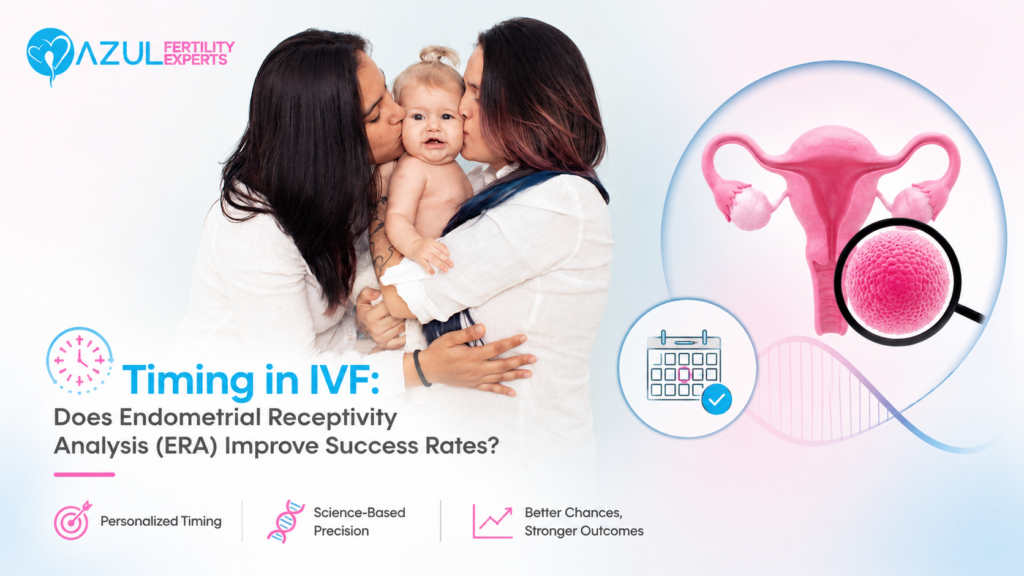
Endometrial Receptivity Analysis is a molecular diagnostic test which measures the expression of genes in the endometrial tissue. A small sample of the lining of the uterus is removed in a mock cycle. This sample is then examined and the endometrium will either be “receptive” or “non-receptive” at that time.
Clinicians can then modify the timing of embryo transfer in future IVF attempts to better optimize the patient’s individual implantation window based on the findings. This individual approach is known as “Precision Embryo Transfer.”
Does ERA Improve IVF Success Rates?
The big issue is still whether or not there is a significant benefit from ERA.
Research paints a complex picture. The results of some studies indicate that ERA can be helpful, especially for patients who have had recurrent implantation failure (RIF). In such cases, a misplaced time of implantation may result in better clinical pregnancy rates.
But in patients having their initial IVF cycle or those without implantation problems, the advantage of ERA is less clear. There have been mixed results from large randomized trials, some suggesting that there is no significant benefit in live birth rates over standard protocol.
While not a universal solution, ERA is a targeted tool that can be used in clinical practice. It is not used routinely for all cases of IVF, but rather in certain patient populations.
The Cost-Benefit Perspective
There is one factor to consider: cost. While IVF is already a costly procedure, extra tests like ERA can also add to the overall IVF price. Patients have to balance the benefits with the increased cost, particularly if evidence does not overcome the risk that the benefits will be limited for some.
However, for those who have gone through several attempts without success, ERA might be a more strategic way to proceed, which may lessen the emotional and financial burden associated with repeated unsuccessful attempts.
The Global IVF Landscape and ERA
With the rising trend of traveling abroad for IVF, many patients are seeking advanced reproductive technologies in countries offering cost-effective treatments.
This may increase the availability of cutting-edge diagnostics, but it also adds some variance in protocols and standards. Clinics should consider their expertise, laboratory quality and be clear about their success rates when looking for treatment abroad.
Limitations and Clinical Considerations
Although it is promising, ERA has drawbacks:
- Invasiveness: Biopsy is minor, but may be uncomfortable.
- Treatment durations may be longer due to Cycle Delay: ERA requires a mock cycle.
- Interpretation Variability: There is not a universal agreement on the interpretation of ERA findings in treatment planning.
- Lack of Universal Consensus: Professional societies are split as to the routine use.
It’s also crucial to note that implantation is a complex process. Genetics of the embryo, uterine anatomy, immune responses, and hormones all are important factors. ERA only considers one aspect of this puzzle.
Who Is it That Should Consider ERA?
ERA may be of special value on the following:
Recurrent Implantation Failure patients
Women who have tried IVF more than once but have not had a successful pregnancy.Those whose infertility remains unexplained after a number of IVF cycles.
When good quality embryos do not implant repeatedly.
For some people, notably those who are having their first IVF experience, it is possible to find a normal timing protocol.
The Future of Personalized Fertility Treatment
ERA is a broader trend in personalized medicine in reproductive medicine. As technology continues to evolve, it is possible to begin to individualize treatment more and more on the basis of the person’s unique biological profile, a profile that does not rely exclusively on generalized treatment protocols.
There is ongoing research to find tools and biomarkers of endometrial receptivity that can be further refined. The objective is simple: to increase the success rate for implantation whilst reducing any interventions that are not needed.
Not every IVF treatment plan requires the same approach. The fertility specialists at Azul Fertility Experts in Costa Rica carefully evaluate each patient’s medical history, implantation patterns, and reproductive goals to determine whether ERA testing may improve outcomes, offering this advanced diagnostic at a significantly lower cost than most U.S. clinics.
FAQs
1. Does everyone need an ERA test?
Usually, patients with multiple implantation failures are the ones recommended for No. ERA, not patients who are starting their first IVF cycle.
2. What is the accuracy level of the ERA test?
The results of ERA are reliable to determine endometrial receptivity status, but its effect on improving live birth rates depends on the patient’s history.
3. Does ERA improve the success rate of IVF?
It could help in some cases, such as patients who have had multiple unsuccessful implants, but is not consistently effective.
4. Are ERAs part of the standard IVF packages?
Not always. May be an additional test and can add to the total cost of IVF.
5. Should I get a referral for IVF if I plan to travel overseas?
If you have had cycles in the past that did not succeed, it may be good to talk to your IVF clinic if you will travel overseas for IVF about your past cycles.